
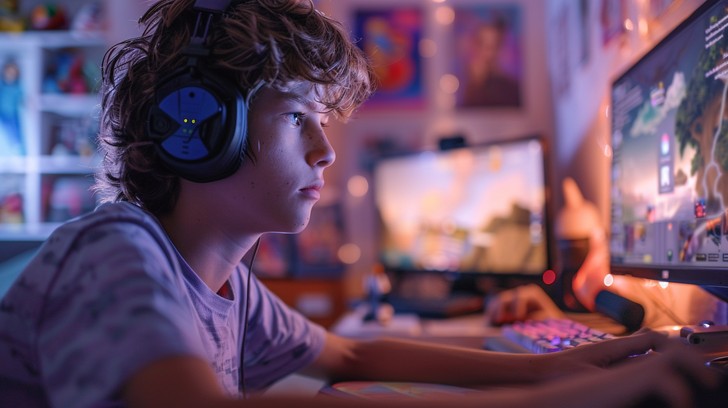
Video games play a significant role in many children’s lives today. For some kids and teens, gaming offers creativity, challenge, social connection, and fun. For others, gaming can become a source of stress, conflict, and concern at home.
Parents and caregivers often ask questions like:
How much gaming is healthy? Why does my child resist stopping? When does gaming become problematic? How do I set limits without turning every conversation into a battle?
This post is the first in a 3-part series focused on raising a balanced gamer. The series will move through three steps: Understand, Connect, and Act.
In Part 1: Understand, we will look at both sides of gaming. Gaming can offer real benefits, and it can also create challenges when it becomes a child’s main source of reward, relief, identity, or connection. Before families jump straight to rules or consequences, it helps to understand what gaming provides and why it can feel so hard for kids to stop.
The Positive Side of Gaming
A balanced conversation about gaming needs to start here: gaming is not all bad.
Many children play games because they are fun, creative, social, and stimulating. Games can encourage teamwork, problem-solving, strategic thinking, persistence, and even friendship. For some kids, gaming offers a place to connect with peers, practice skills, and experience a sense of progress.
When games fit into a child’s life alongside sleep, school, family connection, outdoor play, hobbies, and emotional regulation, gaming can be part of a healthy recreational life. The goal of raising a balanced gamer is not to shame gaming or treat it as the enemy. The goal is to help gaming take its proper place in a child’s life.
Gaming Meets Core Psychological Needs
Video games often serve important psychological functions for children and teens. They can meet needs for challenge, achievement, identity, social connection, and felt safety. These needs are central to healthy development, which helps explain why gaming can feel so meaningful.
Challenge and Achievement
Kids need to feel capable. They need challenge, growth, progress, and the satisfaction of getting better at something.
Games provide this incredibly well. They offer clear goals, immediate feedback, and a balanced level of difficulty that keeps players engaged. A strong game usually does not let a child win instantly. If the game feels too easy, the child gets bored. If it feels impossible, the child gives up. So games often live in the “almost there” zone.
The player fails, adjusts, tries again, gets closer, and eventually succeeds. That success feels powerful because the child had to work for it.
This can be especially compelling for kids who feel bored, discouraged, anxious, or unsuccessful in other areas of life. School may feel slow or vague. Sports may feel too exposing. Social life may feel risky. In a game, effort often leads to visible progress.
Identity and Safe Self-Expression
Gaming can also provide a place for identity and self-expression.
Adolescence is a tender stage of development. Kids and teens become more aware of how others see them, but many have not yet developed a sturdy internal sense of self. A social mistake, a changing body, a feeling of not fitting in, or a painful comparison can land with enormous weight.
Games can offer a space where kids feel more confident and in control. Online, a child can choose how they show up. They can build an identity around skill, humor, strategy, creativity, leadership, or status. If real life feels full of judgment, awkwardness, or insecurity, the digital world may feel easier to inhabit.
From a nervous system perspective, that matters. Felt safety does not only mean physical safety. It also includes protection from humiliation, rejection, powerlessness, and exposure.
Community and Belonging
Gaming can also meet a need for belonging.
For many kids, gaming is not just an activity. It is a relational space. Friends show up there. Teammates show up there. Shared rituals happen there. Inside the game, a child may feel known, included, useful, and expected.
This is especially important for kids who struggle socially offline, feel disconnected in person, or have gone through a move, loss, school change, friend rupture, or season of loneliness. For them, online gaming communities may offer continuity and connection.
This does not mean every online relationship is healthy or that parents should ignore concerns. It does mean that when adults call gaming “just screen time,” they may miss what the child experiences. Turning off the game may not feel like ending an activity. It may feel like leaving their people.
When Gaming Becomes Problematic
Even though gaming can offer real benefits, it can become concerning when it interferes with daily functioning, emotional health, or relationships.
Parents often notice the problem when sleep suffers, homework does not get done, moods worsen, hygiene slips, family connection thins out, or a child loses interest in other activities. At that point, caregivers may feel pressure to intervene quickly.
That instinct makes sense. But raising a balanced gamer requires more than focusing on what gaming takes away. We also have to understand why kids keep returning to it.
Why Gaming Can Feel Hard to Stop
Gaming can feel hard to stop because it affects the brain, the nervous system, and a child’s emotional needs at the same time.
Gaming Hooks the Brain’s Reward System
Games do not simply reward kids for playing. They reward kids in a carefully timed pattern that keeps the brain engaged.
Dopamine helps shape behavior through pleasure, reinforcement, and anticipation. When something feels good, the brain pays attention. When the brain connects that good feeling to a behavior, it wants to repeat it. Then, over time, the brain starts looking forward to the next reward before it even happens (Kanojia, 2024).
That helps explain why games can become so compelling. Inside the game, a child may experience a steady loop of challenge, effort, failure, improvement, and reward. The brain reads that loop as meaningful. It learns, “Do this again.”
Dopamine does not deserve the villain role. Dopamine helps kids practice, learn, pursue goals, and feel proud when they accomplish something hard. The concern comes when games offer that reward loop in a highly concentrated, repeatable way. They give kids challenge and success again and again, often much faster than real life does.
Over time, ordinary life can start to feel slow by comparison. Reading a book, cleaning a room, finishing homework, or playing outside may not offer the same intensity, novelty, or immediate payoff.
Gaming Can Become an Outsourced Regulation Strategy
Gaming does not only activate reward. It can also help kids escape uncomfortable feelings.
A child feels stressed, embarrassed, lonely, overwhelmed, or ashamed, and then turns to gaming. From a nervous system perspective, this makes sense. Gaming pulls the child into a focused, highly engaging world. It narrows attention, quiets awareness of distress, and gives the child temporary relief from whatever feels too uncomfortable to face.
In the short term, that strategy can work. The child feels better, or at least feels less. Emotional pain fades into the background for a while (Kanojia, 2024).
The problem grows when gaming becomes the main way a child manages distress. The more a child outsources regulation to gaming, the less practice they get tolerating discomfort, asking for support, moving through frustration, or developing other coping tools.
Over time, the nervous system can begin to narrow around one primary strategy: When I feel bad, I game.
That pattern can make transitions away from gaming feel much bigger than they look from the outside. A parent may think, “I just asked them to turn it off.” But the child’s nervous system may experience it more like losing access to relief.
Gaming Can Stall Skills That Need Practice
Kids and teens are still building the brain-based capacities that help them pause, shift attention, tolerate frustration, plan ahead, wait for rewards, and recover when things do not go their way.
These skills grow through practice. Real life gives kids that practice through homework, reading, chores, friendships, sports, creative projects, and moments of disappointment or repair.
Gaming can complicate that process because games hold attention so effectively. The game provides novelty, feedback, urgency, and reward. The child does not have to work as hard to initiate focus, stay with something boring, manage delayed payoff, or keep trying without an immediate reward.
Gaming can also affect how kids learn from mistakes. In real life, discomfort often helps a lesson stick. A child forgets an assignment and feels embarrassed. They speak harshly to a friend and feels regret. They procrastinate and feels the stress of rushing at the last minute. Those feelings do not feel good, but they can help the brain learn, adjust, and remember.
When a child quickly escapes those feelings through gaming, the emotional lesson may not land as deeply. Parents may have what seems like a meaningful conversation after a difficult night. Their child appears remorseful. Everyone agrees on what needs to change. Then the same cycle happens again the next day.
For caregivers focused on raising a balanced gamer, this distinction matters. The issue may not come from a lack of insight. A child may genuinely understand the problem in the moment. But insight alone cannot compete with reward loops, emotional avoidance, and habit patterns all tangled together.
Understanding the Child Behind the Gamer
A child’s resistance to stopping is not always simple defiance or manipulation. It may reflect a nervous system reacting to the loss of reward, relief, identity, or connection.
This does not excuse unhelpful behavior. It does not mean parents should avoid limits. It simply helps caregivers respond with more accuracy.
If gaming gives a child a sense of competence, removing it may feel like losing the one place they feel successful. If gaming gives a child social connection, turning it off may feel like being cut off from friends. If gaming gives a child relief from stress or shame, limits may feel like losing access to their main coping tool.
This is why raising a balanced gamer starts with understanding. When caregivers understand what gaming provides, they can build boundaries that address the actual need instead of only reacting to the behavior.
Balancing Limits with Understanding
Effective boundaries work best when they are built on curiosity and connection.
For example:
A child who games to cope with stress may need help developing other ways to decompress after school.
A child who games for social connection may need support building offline friendships and belonging.
A child who games for competence may need real-life opportunities where effort leads to visible progress.
A child who resists transitions may need more structure, predictability, and support around stopping.
Limits still matter. Sleep matters. School matters. Family connection matters. Emotional health matters. But limits tend to work better when caregivers also understand what gaming has been doing for the child.
Why Power Struggles Arise
Parents have good reason to feel overwhelmed. Families now have to respond to a digital world that developed much faster than our parenting playbooks did.
Many caregivers did not grow up with games that update constantly, connect kids socially, reward players frequently, and follow them through videos, streams, chats, and online communities even after the console turns off.
Gaming often becomes a flashpoint because parents usually notice the problem once it starts disrupting daily life. By the time caregivers step in, they often feel alarmed and frustrated.
The child may experience the same moment very differently. The parent thinks, “I am trying to help you.” The child’s nervous system may hear, “You are taking away the thing that helps me feel okay.”
That mismatch can quickly create a cycle of escalating resistance and control struggles. The parent pushes harder. The child resists harder. Soon, the conversation stops being about gaming and becomes a battle over power, trust, and control.
Raising a balanced gamer does not start with proving who has control. It starts with stepping out of the “bad kid versus strict parent” story and into a more accurate one:
A child uses gaming for reasons that make sense, and if it’s problematic, the family needs a healthier path forward.
What Caregivers Can Do Now
If your child feels deeply attached to gaming, start with curiosity and calm reflection.
Ask yourself:
- What does gaming provide for my child that feels hard to find elsewhere?
- When does gaming seem most intense or most needed?
- How does my child react when gaming gets interrupted?
- What feelings might be underneath the behavior, such as stress, shame, loneliness, boredom, or insecurity?
- What skills or supports might my child need beyond tighter limits?
These questions help caregivers slow down long enough to see the whole child. They also help families avoid treating every gaming struggle as a behavior problem that needs a faster consequence.
Moving Toward Balance
The goal is not to demonize gaming. The goal is to help gaming occupy a healthy place in your child’s life.
Gaming can coexist with school, family, friendships, sleep, hobbies, and emotional health when it has appropriate boundaries and when children have other ways to meet their needs for reward, relief, identity, and connection.
That is the heart of raising a balanced gamer: helping kids enjoy gaming without letting gaming become the main place they go to feel successful, soothed, known, or okay.
Looking Ahead
In the next post in this raising a balanced gamer series, we will move into Part 2: Connect. That post will focus on how to talk with your child about gaming in ways that build trust, reduce defensiveness, and create more room for collaboration.
Then in Part 3: Act, we will look at how to set healthy gaming limits without immediately triggering a power struggle. We will explore how families can create boundaries that support balance, regulation, and real-life capacity.
Reference
Kanojia, A. (2024). How to raise a healthy gamer: End power struggles, break bad screen habits, and transform your relationship with your kids. Rodale Books.