
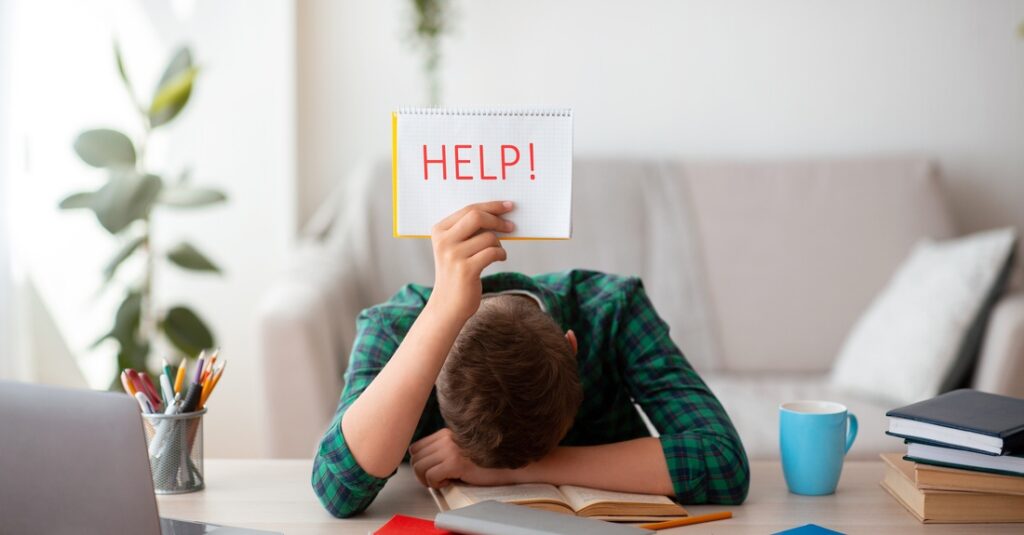
April is National Stress Awareness Month. It’s a good time to pause and look more closely at the patterns of stress showing up in the lives of kids and teens.
Most caregivers already know stress matters. You see it in big reactions, shutdowns, irritability, and those “out of nowhere” moments. When that happens, the instinct is to fix the problem. You try to reduce, remove, or solve whatever is causing the stress.
But when it comes to helping kids and teens deal with stress, the goal is not to eliminate stress. The goal is to understand it so you can respond in ways that support growth.
What Stress Really Is
People often talk about stress as something negative. In reality, it is much more neutral.
At its core, stress is a demand on the body’s physiological systems (Perry, as discussed in Gobbel, n.d.). It signals that something important is happening and needs attention.
Stress shows up in everyday ways. Hunger stresses the body. Exercise stresses the body. Conflict or disconnection in relationships also creates stress.
Stress itself is not the problem. We actually need it. When you understand that, your goal shifts. Instead of removing stress, you begin helping kids and teens deal with stress in healthier ways.
Good Stress vs. Harmful Stress
If stress is neutral, what makes it helpful or harmful?
The answer is pattern.
Stress that feels predictable, reliable, and controllable supports growth (Perry, as discussed in Gobbel, n.d.). It challenges the system just enough to strengthen it.
Stress that feels unpredictable, extreme, or prolonged does something different. It can overwhelm the system and disrupt development. This is especially true for a developing brain.
This distinction matters. It helps you focus on helping kids and teens deal with stress in ways that build resilience instead of overwhelm.
The Stress Response System
When stress shows up, the body responds. That response includes fight, flight, freeze, and a cascade of stress chemicals. We call this the stress response system.
Kids do not choose these responses. Their bodies activate them automatically. Over time, experiences shape how this system works.
Early life plays a major role. The brain develops rapidly in the first months of life, which makes those early experiences especially influential (Perry, as discussed in Gobbel, n.d.).
For some kids, this system becomes more sensitive over time. When you understand why, you can respond with more clarity and compassion.
What Can Sensitize a Child’s Stress Response System?
A sensitized stress response system usually develops over time. It reflects a mix of experiences and biology. There is rarely one single cause.
This topic is complex. Each child’s story is different. What follows is a starting point, not a complete explanation.
Environmental Experiences That Shape the System
The stress response system develops through repeated experiences. Patterns matter more than single events.
When stress feels unpredictable, prolonged, or overwhelming without support, the system adapts. It becomes more sensitive and more protective.
Several experiences can contribute to this pattern.
Developmental trauma plays a role. Early fear, inconsistency, or unmet needs shape how a child detects safety and danger.
Toxic stress also matters. When stress stays high without enough caregiver support, it places a constant load on the body.
Marginalization creates another layer. When a child feels excluded or unseen, their body carries that stress over time.
Adverse childhood experiences, such as loss or instability, can further shape the system. Even chronic unpredictability, like inconsistent routines or unclear expectations, can make it harder for the nervous system to settle.
Across all of these, one theme stands out. It is not just that stress occurred. It is how it was experienced. When stress lacks predictability, support, or resolution, the system shifts toward protection.
This perspective changes how you respond. Instead of trying to fix behavior, you focus on helping kids and teens deal with stress at the nervous system level.
Biological Factors: Neurodivergence and Sensitivity
Not all stress sensitivity comes from experience. Some kids start with more sensitive nervous systems.
Neurodivergent children, including those with ADHD, autism, or sensory differences, often experience the world more intensely. Their systems take in more input and process it differently.
Sensory input may feel overwhelming. Transitions may feel destabilizing. Executive functioning demands can create ongoing stress. Social environments may require extra effort.
None of this reflects a deficit. It reflects a difference in wiring.
At the same time, these differences can lead to more frequent stress. Stress may also take longer to organize and resolve.
It is also important to name something often overlooked. Many neurodivergent kids experience chronic misattunement. Adults may miss their sensory needs, communication style, or regulation patterns. Over time, this sends a painful message: something about you is too much, not enough, or wrong.
That experience becomes stress in the body.
Neurodivergent kids also face higher rates of marginalization. They may feel misunderstood, corrected more often, or excluded. They may need to function in environments that do not fit their nervous system.
Over time, these experiences can accumulate. For some kids, they begin to feel trauma-like.
Neurodivergence itself is not the problem. The mismatch between the child and their environment is what creates stress. Recognizing that helps you approach helping kids and teens deal with stress in a more attuned, affirming way.
Holding the Bigger Picture
Most of the time, no single factor explains a child’s stress response.
Instead, several things interact. Biology, early experiences, current environment, and available support all play a role.
Two children can face similar situations and respond very differently. The same child may respond differently depending on the setting.
This is why helping kids and teens deal with stress requires curiosity. You are not trying to find one cause. You are trying to understand the system well enough to support it.
This post only scratches the surface. Even so, this level of understanding can shift how you see your child and how you show up for them.
What Helps Kids Build Resilience
If stress responses live in the nervous system, support must start there.
Across situations, the path to resilience looks similar. Kids need co-regulation, connection, and repeated experiences of felt safety (Gobbel, n.d., summarizing Perry).
Before kids can regulate on their own, they need support from someone else. They need you to help them move through stress.
That might mean staying close when they feel overwhelmed. It might mean using a calm, steady voice. It might mean creating predictable routines or helping them name what they feel in their body.
These moments shape the brain over time. They teach the nervous system something new: stress can happen, and I can get through it.
That belief sits at the center of helping kids and teens deal with stress.
Changing How We See Our Kids
Sometimes the biggest shift happens in how you see your child.
If you view behavior as defiance or overreaction, you will likely respond with correction. If you understand that the stress response system is activated, you will respond differently.
That shift matters. Your interpretation shapes your response. Your response then shapes your child’s nervous system.
You are not excusing behavior. You are understanding it in a way that makes growth possible.
Supporting Kids Without Removing All Stress
It is natural to want to protect kids from stress. You step in, smooth things over, and try to prevent overwhelm.
Sometimes that is exactly what your child needs.
But resilience does not come from removing stress. It comes from changing how stress is experienced.
You can support that process in simple ways. Encourage your child to face challenges while staying connected. Hold boundaries even when they feel upset. Break big tasks into smaller steps. Stay present instead of removing the difficulty.
You are not removing stress. You are shaping the experience of it. That is a key part of helping kids and teens deal with stress.
Two Resources To Help You and Your Child Put This Into Practice
Understanding stress is one thing. Applying that understanding in the moment is another.
To support families who are helping kids and teens deal with stress, we created two free resources.
Stress Patterns Reflection Guide
This guide helps you, the caregiver notice how stress shows up for your child and where small shifts can help. It also offers simple, practical ways to support your child’s nervous system during stressful moments.
Weathering the Storm: My Stress Management Forecast
This worksheet helps kids and teens understand their stress using a simple “weather” metaphor, so they can notice what’s happening in their inner world. It also gives them practical tools to “weather the storm” and build their own plan for getting through hard moments.
A Helpful Question For Caregivers
When your child struggles, ask yourself:
“Does this stress feel manageable for them, or overwhelming?”
Let that answer guide your next step.
The goal is not to remove stress. The goal is to help your child experience stress in ways that build capacity over time. That is the long-term work of helping kids and teens deal with stress.