
A growing amount of people know February kicks off with International Play Therapy Week! This week, sponsored by the Association for Play Therapy, invites us to pause and recognize something children instinctively know: play is not extra…it’s essential. And a robust body of research shows play therapy supports children’s mental health, emotional development, and sense of safety across the world.
At Early Connections, this celebration resonates deeply with our daily work. We meet caregivers who are thoughtful, observant, and motivated to support their children, but who are also understandably unsure about what play therapy actually involves. Many come to us with common questions about play therapy, often after trying other approaches that didn’t quite fit their child.
This guide is meant to slow things down and answer those questions with clarity. Not with sales language or oversimplified explanations. Just an honest look at what play therapy is, how it works, and how to think about whether it’s the right support for your child.
What Is Play Therapy?
One of the most common questions about play therapy is a reasonable one:
“How is play therapy different from just playing at home?”
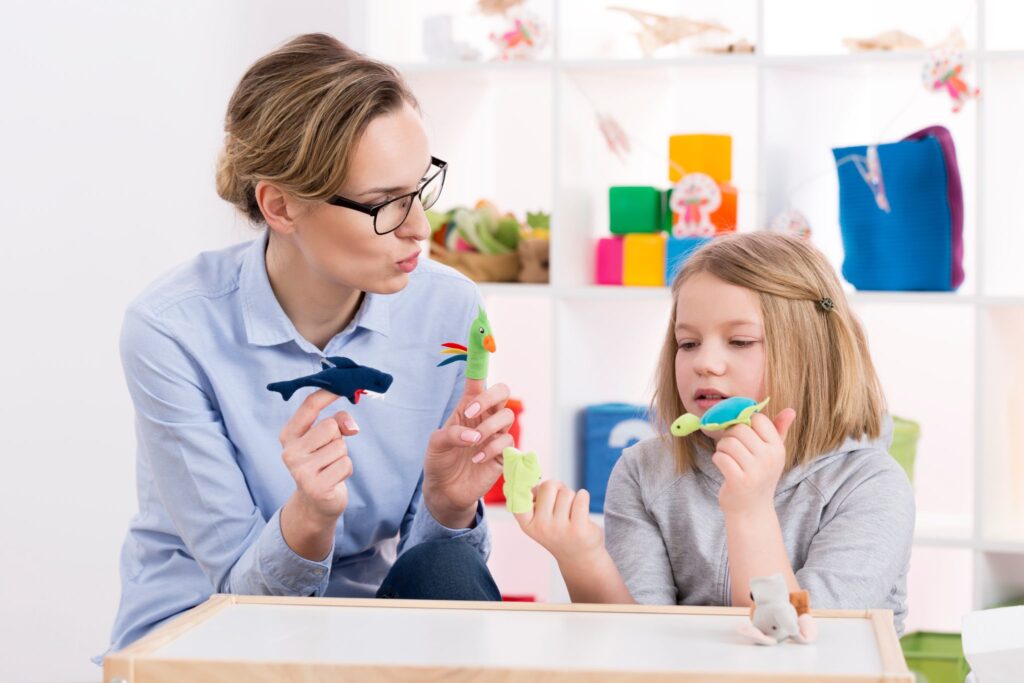
Play therapy is a structured, evidence-based form of mental health therapy provided by a trained clinician who uses play as the primary medium for communication and healing. For children, play is not a break from learning or emotional processing—it is how learning and processing happen.
Adults rely on language, reflection, and insight to make sense of their inner world. Children, especially younger ones, don’t yet have the neurological development or emotional vocabulary to do that reliably. Instead, they communicate through movement, imagination, repetition, creativity, and sensory experience.
Play therapy meets children where they are developmentally. Rather than asking a child to explain how they feel, the therapist creates an environment where the child can show how they feel—safely, symbolically, and at their own pace.
The toys themselves are not what make play therapy therapeutic. What matters is:
- The relational safety and connection built over time between therapist and child
- The therapist’s training and clinical lens
- The intentional setup of the playroom
Within that relationship, children are able to explore emotions, experiences, and patterns that may feel overwhelming or inaccessible in everyday life.
How Does Play Therapy Work? Moving Beyond the “Talk Therapy” Model
Another of the common questions about play therapy we hear is some version of:
“How can therapy help if my child isn’t talking about what’s wrong?”
This question comes from an understandable adult assumption: that insight and verbal processing are required for change. In child development, that assumption simply doesn’t hold.
In play therapy, the play is not a warm-up for “real therapy.” The play is the therapy.
When a child repeatedly builds and knocks down a structure, enacts a story with characters, controls and re-controls a scene, or uses imaginative play to explore fear, power, or safety, their nervous system is doing meaningful work. They are organizing experiences, releasing emotional tension, and experimenting with new ways of being in the world.
We don’t require children to translate that work into adult language for it to matter. In fact, pressuring children to verbalize can interrupt the process—especially for children with trauma histories, anxiety, ADHD, autism, or other neurodivergent profiles.
From a brain development perspective, play therapy works because it allows emotional processing to happen from the bottom up, rather than relying on top-down reasoning that children are not yet developmentally equipped to use consistently.
Honoring Different Communication Styles
At Early Connections, we approach play therapy from a neurodiversity-affirming perspective. This means we do not treat verbal expression as the “best” or most mature form of communication. By removing the pressure to “use your words,” play therapy reduces cognitive load and allows children to stay connected to their internal experience. When children feel understood without being forced to perform, they are more likely to engage authentically, and that authenticity is where growth happens.
Why Are There So Many Types of Play Therapy, and Which One Is Right for My Child?
As caregivers research play therapy, one of the most common questions about play therapy quickly becomes confusing:
“Why are there so many different kinds—and how do I choose the right one?”
You may come across approaches such as Child-Centered Play Therapy, Adlerian Play Therapy, Filial Therapy, Theraplay, or Cognitive-Behavioral Play Therapy. Each of these models emphasizes different aspects of the therapeutic process.
Some approaches prioritize the child’s autonomy and allow them to lead the session with minimal adult direction. Others introduce more structure, specific goals, or skill-building activities. Dyadic models involve caregivers directly in the work, focusing on strengthening attachment and co-regulation.
Rather than trying to choose the “best” model in advance, it can be more helpful to reflect on your child’s temperament and needs. You might consider questions like:
- Does my child tend to resist adult direction, or do they feel safer with structure?
- Do they warm up slowly, or jump into activities quickly?
- Are they easily overwhelmed by choices?
- How do they respond to new relationships?
It’s also important to know that a skilled play therapist does not rigidly adhere to a single model. Children are not static, and therapy shouldn’t be either. What supports a child at the beginning of therapy may shift over time as trust develops and needs change.
There is no single formula for how children heal. Play therapy works best when the therapist remains flexible, responsive, and deeply attuned to the child in front of them—not just to a particular framework.
What Happens During a Play Therapy Session?
Another area where caregivers have common questions about play therapy is what a session actually looks like.
While no two sessions are identical, there are some consistent elements that help demystify the process.
The Playroom Environment
Play therapy rooms are intentionally curated spaces. They are not random collections of toys, nor are they meant to entertain in the traditional sense. The materials are chosen to support emotional expression, symbolic play, sensory regulation, and relational exploration.
You may see:
- Figurines, puppets, or dollhouses
- Art materials
- Sand, water, and other sensory tools
- Building materials (i.e blocks and legos)
- Movement-based items
- Books and games
- And more!
Each of these tools offers a different pathway for communication.
The Therapist’s Role
The therapist’s level of engagement depends on the child, the therapeutic approach, and the goals of therapy. In some sessions, the therapist may primarily observe and reflect. In others, they may actively join the play, introduce activities, or coach caregivers during dyadic work.
Regardless of approach, the therapist is always tracking the child’s emotional state, nervous system cues, and sense of safety. The goal is not to direct the child toward a specific outcome, but to support authentic expression within a secure relational container.
The Process Over Time
Progress in play therapy often unfolds gradually. A session that looks repetitive or uneventful on the surface may be deeply meaningful internally. Over time, caregivers often notice changes outside the therapy room—shorter meltdowns, improved flexibility, increased emotional expression, or greater capacity for repair after conflict.
Because of this, what caregivers say before and after sessions matters more than many realize. We created a free resource, What to Say (and Not Say) Before and After a Play Therapy Session, to help families support the therapeutic process without unintentionally disrupting it.
Many caregivers wonder how to best support the play therapy process at home—without overthinking it or turning everyday moments into therapy. We created a free resource, How to Support Your Child’s Play Therapy Journey at Home, to help parents understand what actually helps between sessions, what to expect as therapy unfolds, and how to stay grounded and supportive without added pressure. This guide pairs well with our resource on What to Say (and Not Say) Before and After a Play Therapy Session and is designed to support caregivers just as much as children.
What Experiences Can Play Therapy Support?
Caregivers often ask whether play therapy is appropriate for their child’s specific situation—another set of common questions about play therapy worth addressing directly.
Play therapy can support children navigating a wide range of experiences, including:
- Emotional regulation challenges and big feelings
- Anxiety, worry, or perfectionism
- Trauma and overwhelming life events
- Neurodivergent support for ADHD or autism
- Family transitions such as divorce, moves, or new siblings
- Social challenges and relationship stress
Because play is so flexible and universal, it can be adapted to meet children with very different needs and developmental profiles.
How Do I Choose a Play Therapist?
One of the most important common questions about play therapy is how to choose the right therapist.
Play therapists are licensed mental health professionals—such as Licensed Professional Counselors, Licensed Clinical Social Workers, or Psychologists—who have completed extensive additional training in play therapy. Many pursue the Registered Play Therapist™ credential through the Association for Play Therapy, which requires specialized coursework and hundreds of hours of supervised experience.
Beyond credentials, fit matters. You are looking for someone who:
- Respects your child’s identity and nervous system
- Communicates clearly and transparently with caregivers
- Welcomes collaboration with parents/caregivers
- Feels aligned with your family’s values
We’ve written a separate, in-depth post to help guide families through this decision:
Choosing the Best Mental Health Professional for Your Child
Final Thoughts
If you’ve been searching for common questions about play therapy, it usually means you’re paying close attention to your child—and that matters.
Play therapy does not rush children toward insight or demand explanations before they’re ready. It creates safety first. And when children feel safe, growth follows naturally.
As we recognize International Play Therapy Week, we remain committed to providing care that honors children exactly as they are. If you’re exploring play therapy for your child or simply trying to understand whether it’s the right next step, we’d be honored to support your family along the way. If you’re a Georgia resident, contact us to discuss play therapy options for you child at Early Connections.